Rising Damp
Rising Damp & How it Impacts London Homes
London was founded around 400 years ago, mainly because of its location; nestled on the banks of the River Thames, the city was accessible by boat, which was a necessity at that time. There is one major drawback to London’s location and that is the layer of clay that covers the Thames Valley Basin, which affects drainage, and this is a major factor with rising damp.
Poor Drainage
Rising damp comes from the ground and with most regions of the capital suffering from inadequate drainage, London homes are under serious threat from ground moisture. To combat this, every structure should have a damp proof course (DPC), typically a thin strip of bitumen that is installed between the lower brick courses, which acts as a barrier to stop moisture in its tracks. If the ground is always wet, any breach of the DPC membrane will result in moisture creeping up the external walls, which is done through capillary action, much like a sponge absorbs liquid.
The Importance of Early Detection
There are no outward signs when rising damp appears; moisture will begin to creep up the walls and cause damage to all materials it encounters. Homeowners should always be observant when it comes to damp and mould and should you notice anything out of the ordinary, you should arrange for London Damp Proofing Ltd to carry out an independent damp survey as soon as possible.
What Are the Tell-Tale Signs That Rising Damp is Present?
Rising damp and penetrating damp are often confused; rising damp will only appear on the ground floor because it is moisture that originates from the ground. Penetrating damp, on the other hand, can come from the roof or external walls.
Tell-tale signs include:
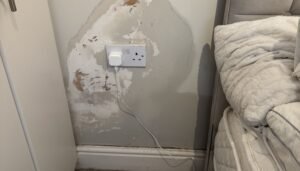
- Tide marks on walls – Yellowish or brownish stains that typically form less than one metre from the ground.
- Peeling wallpaper – Moisture breaks down wallpaper adhesive, causing the corners to peel away from the substrate. If this happens at height, the cause is likely to be penetrating damp or a leaking water pipe.
- Paint bubbling – On lower walls or skirting boards, this is a sure sign that moisture is coming up from the ground.
- Salt deposits – When damp evaporates, it leaves behind a line of salt deposit that is visible as a horizontal line.
- Damp and damaged plaster – Salt deposits react with plaster, causing it to crumble and break away from the wall.
- Fungal growth – If damp is present for long periods, mould will usually appear, which might be brown, black or creamy white in colour.
- Moss growth on lower external walls – If damp is present, moss and other vegetation can take hold, especially close to the ground level.
Should you notice one or more of these signs, it is very likely that rising damp is present and the sooner you book an independent damp survey from London Damp Proofing Ltd, the better.
Best Treatment for Rising Damp
If the existing DPC is compromised, it can be very difficult to replace. The best long-term solution is to inject a chemical foam into the walls just above ground height to form a new moisture barrier. It may be possible to repair the existing DPC, if it is breached at one specific location, although there are no guarantees that it won’t happen again at some time in the future.
Seek Professional Advice
Rising damp can cause serious damage, and a bad diagnosis would result in wasted money and ineffective repairs. London Damp Proofing Ltd has been providing accurate damp surveys for London homeowners for many years and our PCA-certified surveyors have seen it all and can provide you with the best long-term recommendations to eradicate all forms of damp, mould and timber decay.
We provide a detailed survey report the day after survey completion and although we do not undertake damp-proofing work, we do work closely with one of London’s top damp-proofing providers.
Call us during regular office hours or leave your details in the online survey booking form provided on the website.
If you are planning to acquire a London property, arrange for a pre-purchase damp survey to ensure that the building is free from damp, mould and timber rot.