Timber Treatment
Wet & Dry Rot in London Homes
There are a number of fungi that attack timber in the UK and due to the damp climate we have in London, this poses a serious threat to all buildings. Fungal growth thrives in damp conditions and wet and dry rot can cause significant damage to a building. The damp UK climate is ideal for timber fungi and once an infestation occurs, serious damage can be caused in a short time if the conditions are right.
If you are planning to buy a London property, we strongly advise you to book an independent damp survey prior to making any offers. Should there be any issues, you can negotiate with the seller and come to a mutually agreeable solution.
Wet Rot
Wet rot is more common than dry rot and it needs a higher level of moisture to grow, at least 50% and it is usually localised to damp patches. When the source of moisture has been eliminated, the fungal growth will gradually die out. Wet rot is typically caused by penetrating or rising damp, a leaking pipe, blocked guttering and a lack of ventilation. Affected timber tends to crack and takes on a darkened colour and a musky smell usually accompanies wet rot.
Dry Rot
Unlike wet rot, dry rot can quickly spread across masonry and brickwork and the fungus requires less moisture to thrive, typically 20-30% is enough for the growth to expand. Spores are released and that enables the fungus to spread to other areas of the house. This is far more destructive than wet rot and if left unaddressed, serious damage can be the result. The fungus can take on a reddish creamy mushroom-like shade with yellowish patches.
Best Long-Term Treatment for Timber Rot
The most important thing is to identify the source of the moisture and carry out effective waterproofing, which cuts off the moisture supply, starving the fungal growth of the dampness it needs. Until this is done, there is no point in repairing the damaged timber. In severe infestations, lengths of timber might need to be replaced, while a water-based fungicide should be applied to all timber sections within the house.
Woodworm
Both the Common Furniture Beetle and the Deathwatch Beetle are found in London and other parts of the UK and both species have the same mode of attack. The adults burrow tiny holes into the wood and lay their eggs inside the timber and when hatched, the larvae start to eat wood pulp.
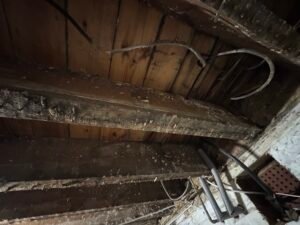
Tell-Tale Signs of Woodworm Infestation
Signs of woodworm include:
- Rows of tiny burrow holes with small piles of dust nearby
- Evidence of creamy white eggs
- Dead adult beetles on the floor
- Crumbling timber that is soft to the touch
In order for woodworm to thrive, they need a still, moist atmosphere and it is critical to source the origins of the moisture and carry out waterproofing work before treating the timber.
Best Treatments for Woodworm
The list of woodworm treatments is long and includes the following:
- The application of permethrin, which is a form of chemical insecticide.
- Inject chemicals directly into woodworm burrows.
- Professional fogging, which is used for under floorboards and in lofts.
- Application of a water-based insecticide.
- Reducing the moisture level to 10%.
- Fumigation, which is only used for severe cases.
If you suspect that woodworm is present in your London home, contact London Damp Proofing Ltd and we can arrange for one of our PCA-certified surveyors to inspect the building and make the best treatment recommendations.
Preventative Treatments for Wet & Dry Rot
A professional service can spray all timber sections in a property to prevent the onset of wet or dry rot and many London homeowners take this proactive measure to ensure that their home is fully protected.
While we only provide a survey service, we do work closely with one of London’s top damp-proofing contractors and they have many years of hands-on experience in treating woodworm, dry rot and wet rot.
Call London Damp Proofing Ltd today or complete the survey booking form on this website and we will get back to you shortly.